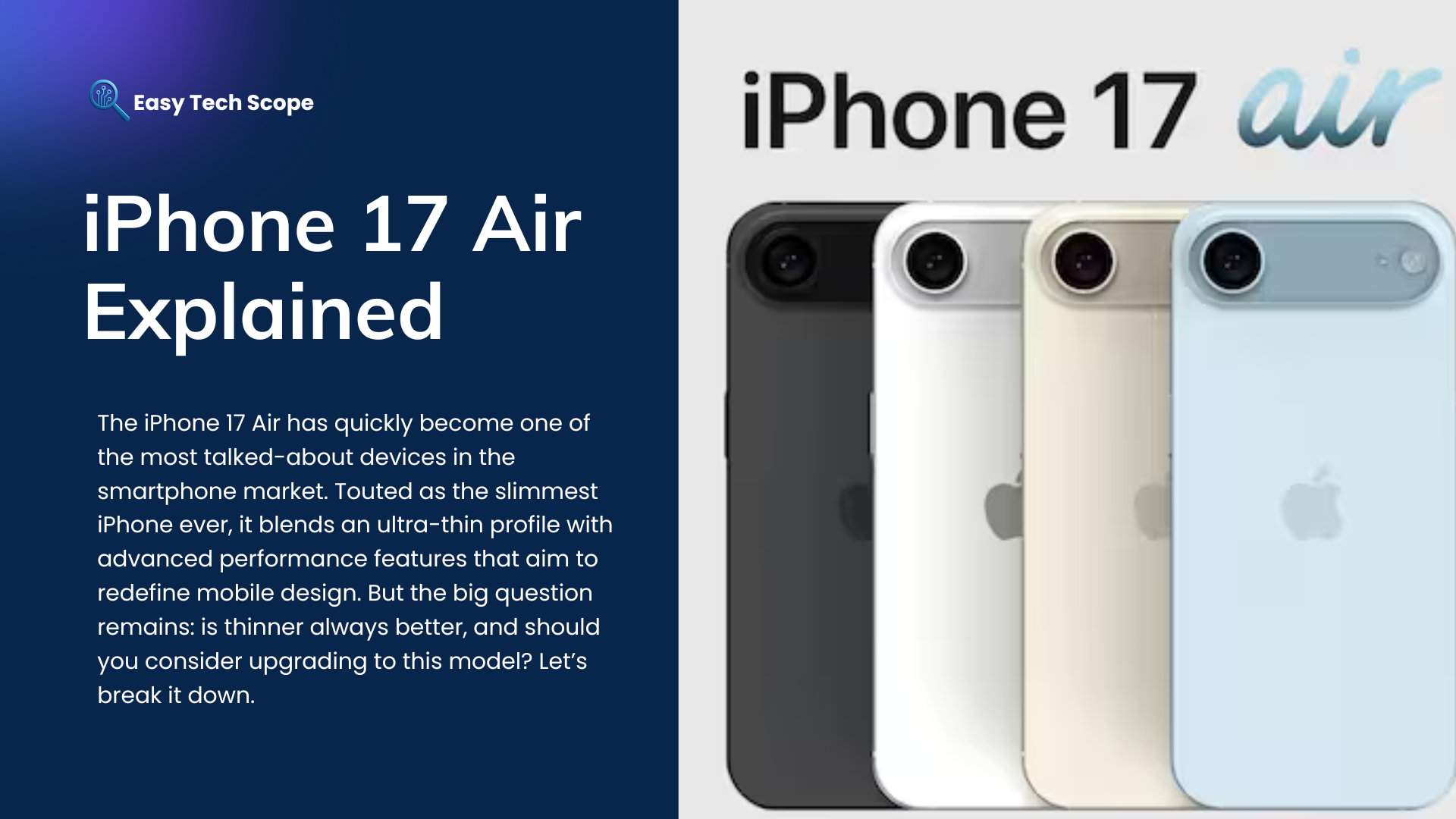

The iPhone 17 Air has quickly become one of the most talked-about devices in the smartphone market. Touted as the slimmest iPhone ever, it blends an ultra-thin profile with advanced performance features that aim to redefine mobile design. But the big question remains: is thinner always better, and should you consider upgrading to this model? Let’s break it down.
A New Standard in Design
Apple has been pushing boundaries in smartphone aesthetics for years, but the iPhone 17 Air takes minimalism to the next level. At just under 6mm thick, it is significantly slimmer than its predecessors, making it the lightest flagship iPhone yet.
The slimness brings undeniable appeal: the phone feels almost weightless in your pocket and has a futuristic elegance that fans of sleek tech will appreciate. The flat edges remain, but the refined design introduces subtle curves for better grip. However, some users may wonder if this ultra-thin build comes at the expense of durability. With a thinner frame, concerns about bending and accidental drops are valid, even though reinforced aerospace-grade materials are used.
Performance Doesn’t Take a Back Seat
While the design is the headline feature, the iPhone 17 Air isn’t just about looks. Inside, it’s powered by the A19 Bionic chip, offering lightning-fast processing speeds and improved energy efficiency. Multitasking, gaming, and content creation feel seamless, showing that thinness doesn’t compromise performance.
Battery life, however, is where skepticism arises. A thinner frame naturally limits space for a larger battery. Apple claims improved energy management offsets this, delivering an all-day experience. Real-world use will determine if the Air can truly keep up with power-hungry apps, video streaming, and gaming sessions.
Camera Upgrades in a Slim Package
Photography remains a top priority for most users, and the iPhone 17 Air doesn’t disappoint. The dual-lens rear system has been enhanced with advanced sensors and AI-driven computational photography. Low-light performance is sharper, and video recording supports improved stabilization, even at 8K resolution.
Still, the Air doesn’t feature the same triple-lens setup as the iPhone 17 Pro models. This might make it less appealing for photography enthusiasts who want every advanced camera tool available.
Who Should Consider the iPhone 17 Air?
The iPhone 17 Air is best suited for users who prioritize portability, style, and everyday use over pro-level camera systems or maximum battery life. If you value a device that feels light in hand yet powerful enough for modern demands, this model is highly attractive.
On the other hand, power users who need extended battery life or advanced photography tools may find better value in the Pro or Pro Max versions. The Air is about elegance and mobility, not necessarily raw endurance.
Final Thoughts
The iPhone 17 Air stands out as the slimmest iPhone ever, blending aesthetics with performance in a way that feels futuristic. Its lightweight design and powerful internals make it appealing, but the trade-offs in battery size and advanced camera features might not suit everyone.
For those who want the most stylish and portable iPhone experience, the iPhone 17 Air is a bold choice. But if you’re after the ultimate all-rounder, you may want to compare it closely with the rest of the iPhone 17 lineup before making your decision.